Recently I took up a new hobby. I did not know anything about it before, and I was so surprised that it was so popular. I found out about it as I was conducting my research on the March 2023 bike trip from Athens to Thessaloniki. I happened to read an article of the bicycle touring pro‘s on winter bike touring, where he mentioned about “Geocaching Trinkets”. I was so intrigued by the fact that I did not understand what those two words meant, so I had to pause my research, and search about that. It was not long before I had created my free account. A few days later I went out on my first hunt, which was unsuccessful.
What is Geocaching?
In a nutshell the concept is this: All around the world there are millions of scattered containers, with sizes ranging from very small ones to quite large ones. Those containers are usually well hidden, sometimes even camouflaged, in public areas like trains or bus stops, fences, rails, wall dents, under bridges, in parks, forests, mountains etc. The people who have originally hidden the containers are sharing their coordinates, making them available for the members of the community who are willing to try to discover them.
This is where players like us come in. We are undertaking the role of the discoverer. We are to use the coordinates of a container as found in various websites, or in the official Geocaching app, and navigate to the declared position of each Geocache (or just cache). When we get there, we are advised to put the GPS or phone away, and start looking for abnormalities in the terrain and surrounding; essentially anything that looks like it could be the hideout of a Geocache.
What happens when if you find a Geocache?
Once you have discovered the container, there is at least a logbook (or log paper) inside, which you can sign with your username. You can also add the date, or write something down if there is room, put on a smiley, use a stamp to leave your mark, and more. In reality you can do whatever you feel like, as long as you are respectful to the cache, its contents, and the other Geocachers. You can also take and attach photos of the cache, but try not to give out the hideout in your pictures (no spoilers please). You can – and you should – log your find in the Geocaching app for other users to know what is the condition of the cache. When you do, the other Geocachers can go through the activity comments, and decide if it is worth searching for the same cache, or if recent logs suggest that the chances of their finding the container are slim.
When you are done with logging your discovery, you are to discreetly put it back all together, and put it where it was originally, and conceal it as best you can, for future seekers to find it next.
The keyword here is “discreetly”. You don’t want to attract too much attention of the passerby, especially when you put it out of its hideout, or back in. If you do catch their eye, there is a chance that they might take the container out, and destroy it, or throw it away, essentially rendering it unavailable for future Geocachers to find.
Log your discovery, then put everything back in the container, and hide it where it was originally.
Sidenote: It could be a cool feature if there was an option to use an alias also, but so far I have not been able to find how (if) you can create one.
Sidenote 2: At the time of the creation of my account the only available username I could think of was kosakkas_dot_com which feels too long to write every time. Even worse, there is usually not enough space in the logs for such a long username. Surprisingly, all three “kosa”, “kosakosa”, “kosakkas” were unavailable during my registration.
What else is there inside a Geocache?
Depending on the size of the Geocache, its contents can vary from just a single roll of paper, to a folded paper and a pencil, or a paper and a couple of items in the size of a marble, to a big collection of smaller and larger gadgets and what not. There is no limit, aside from the volume of the container of course.
What you should expect to always find in a Geocache is any form of paper for you to sign. Then there are Trackables and Tradeables.
Trackables are objects which have an ID, and which can be tracked. Trackables are meant to be moved from cache to cache. Personally I haven’t found any yet. Even if I have, I have not had the experience to realize it.
Tradeables are objects which you can trade. Usually they are small and valueless, or dirt cheap at the very most. However, even in my brief engagement with the hobby, I have seen larger ones already, like playmobil figurines or pins, or magnets.
Personally I have a quite large array of glass and wooden marbles, which I am leaving inside caches, if there is enough space.
The box where I kept my marbles gathered dust. Using them as Geocache Tradeables I can put them into good use once again.
Who wins?
The winner is whoever participates in the game. The prizes are the joy of hunting and discovering a cache, the answering your curiosity on what items will be waiting there for you, left by people you usually don’t know. The pleasure of leaving your Tradeables there, for future discoverers of the cache, or of taking something out on the only condition (informal agreement between Geocachers) that you leave something of yours in return. The happiness of creating a party of friends with the intention to visit places you’ve never been before to hunt for Geocaches. The award of the beautiful views, and places you visit in search of the hidden caches.
The whole Geocaching experience transmits a treasure hunt feeling to the participants. You can spend an hour in the park, and feel like an adventurer seeking places never visited or seen before.
Especially with regards to visiting new places, I would like to note that very close to the place that I live, there is a very large park. That park is very popular among people who like outdoor activities, both in the area and farther. I have been visiting there all of my life, and the past 10 years or so I have been walking my dog there regularly. As a result of geocaching I had the great opportunity to visit some areas of that park, and some hidden corners I had never explored before.
Just for this fact alone I believe it is worth giving Geocaching a try. Even if you don’t get to discover anything, just navigating to where a cache is supposedly hidden can prove a very rewarding experience on its own!
Visiting beautiful places right under your nose.
A couch on the edge of the rocks. It was higher than it looks.
Enjoying the landscape after having just discovered a difficult cache.
My Stats
So far I have attempted to discover approximately 25 caches. Out of those, I have really found 18. The remaining 7 were either destroyed, or better hidden than my discovery skills. See below a small array of some of the caches I have discovered so far.
A typical micro Geocache.
A micro Geocache in the shape of an acorn.
A couple of small Geocaches.
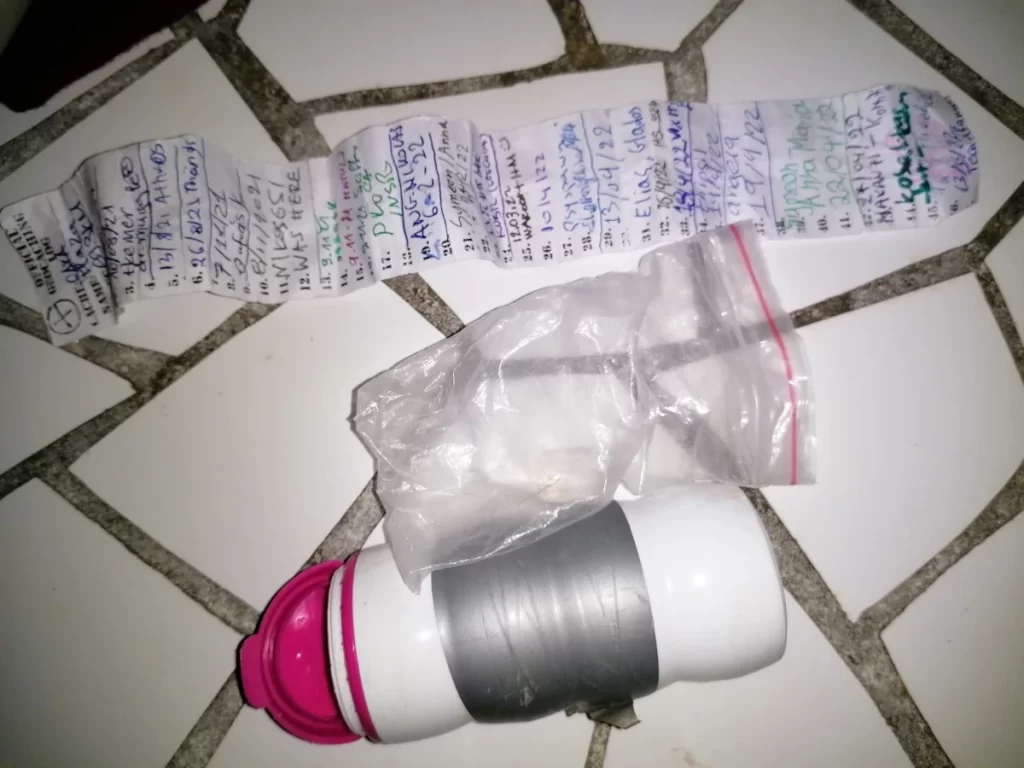
A magnetic film canister with a log in a plastic bag.
Some tradeables inside a small Geocache.
An example of a large Geocache.
I’m sold. What do I pay?
That is the coolest thing about geocaching. If all you want to do is to find caches in places that you visit, you don’t need to pay anything at all. It is completely free, forever. Just open a browser and search for a Geocache’s coordinates in the area you are interested in. Better yet, create a free account in the official Geocaching community, and use their very convenient map in the mobile application, or use their website.
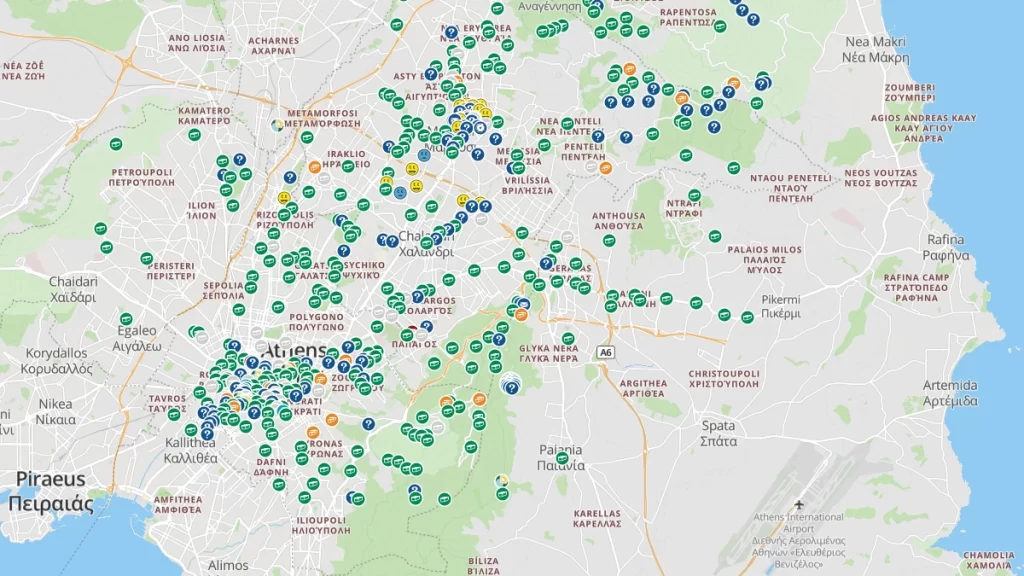
Just click on any of the green icons – – on the map. Usually there are more than enough nearby. All other icons are premium features, which you could enable later, or right away if you’d like.
An example of the number of hidden caches in a given area. This is Athens (Greece), and suburbs.
Is it worth upgrading to Premium?
I am recommending that you upgrade only after you’ve run out of free caches in your area. That said, I have already upgraded my account for two reasons. Firstly, I had gone for a ride in a nearby mountain the other day, and I had parked my car to enjoy the view. I thought to myself “let’s check if there are any caches nearby” only to realize I had parked exactly on top of a premium cache, and there were no free caches there. Secondly I had a coupon for 25% off for the first year. The coupon was nearing its expiration date. However if I wasn’t motivated from the first reason, I would probably not had been convinced to redeem the coupon, to be honest. Also, after paying and upgrading, I went to search for the cache, which I did not find.
It turns out that the premium caches are primarily a more complicated way to play the game. For instance, you don’t get to know the exact location of the item you want to discover before you have solved some puzzle, like a Sudoku, or a message decryption, or some Morse code translation, to name a few. In other cases you are required to visit a couple of places to collect the longitude and the latitude of the final target cache.
To put it in simple words, the free version allows you to discover caches of a difficulty level of up to 2/5, while the premium version usually includes caches of a higher difficulty.
Information for fellow Geocachers
My Geocaching username is kosakkas_dot_com
A link to my account in Geocaching.com is this (requires login)
You can also track my geocaching progress in the following data visualization tables made available by the PROJECT-GC.


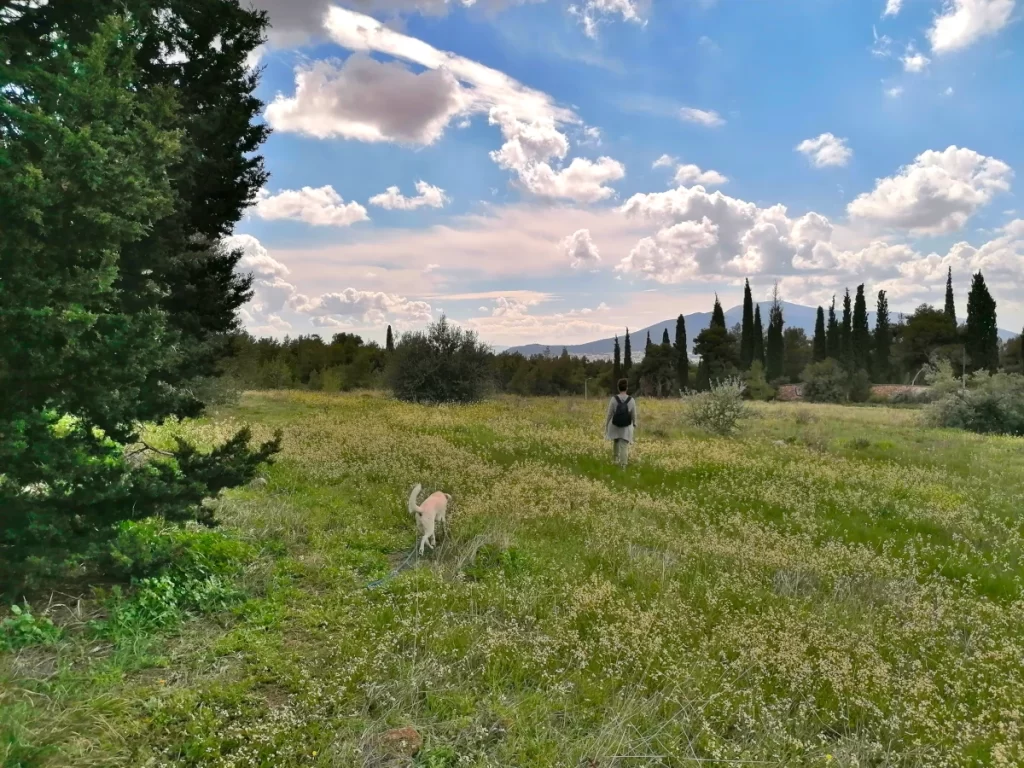 Visiting beautiful places right under your nose.
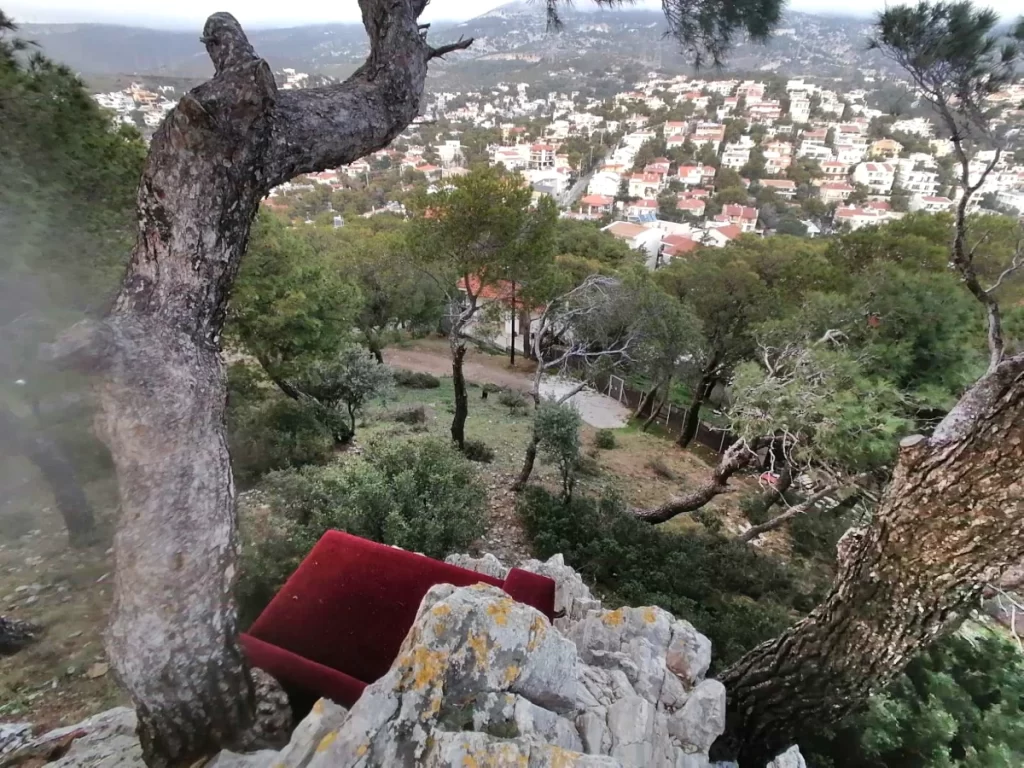 A couch on the edge of the rocks. It was higher than it looks.
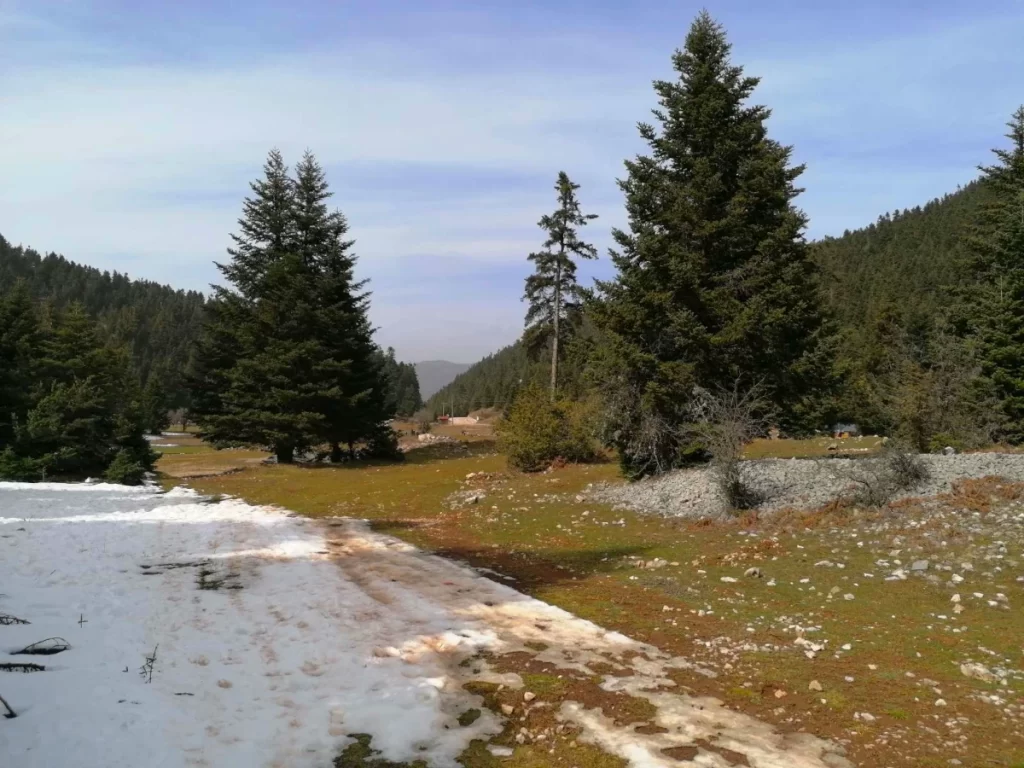 Enjoying the landscape after having just discovered a difficult cache.
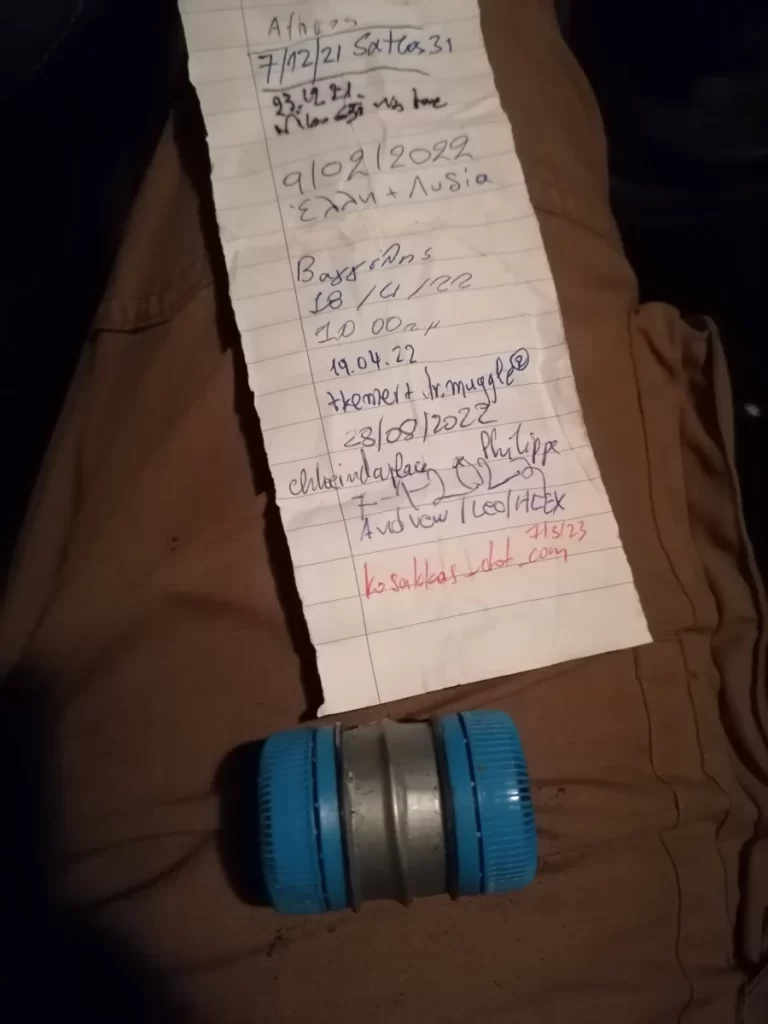 A typical micro Geocache.
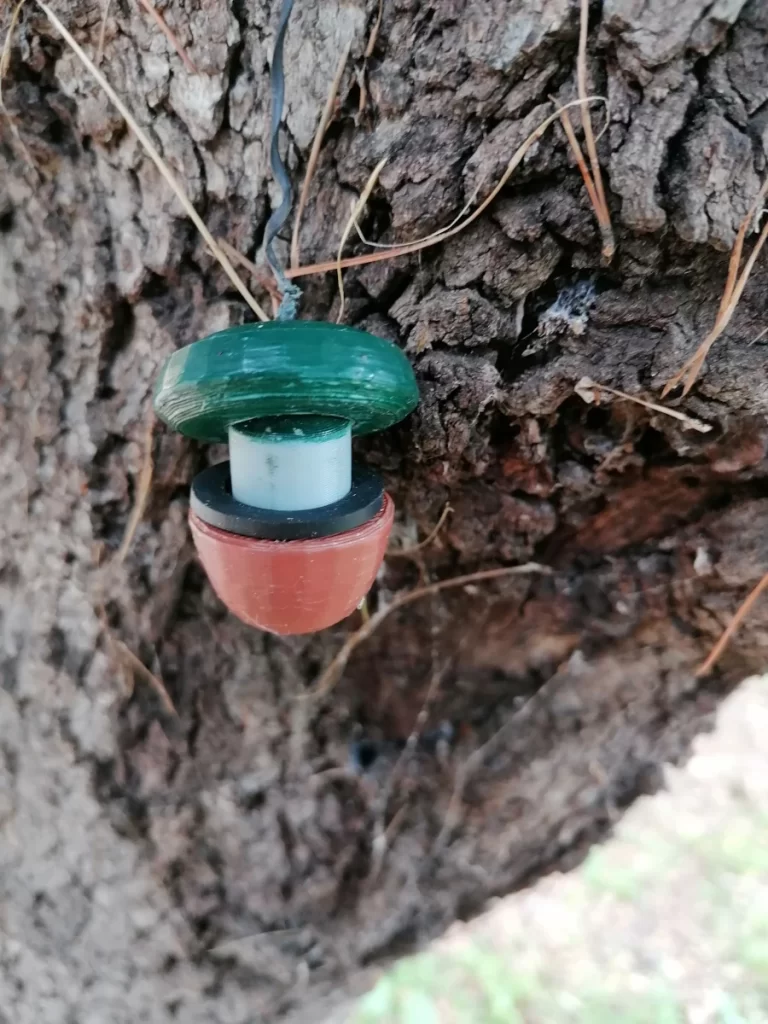 A micro Geocache in the shape of an acorn.
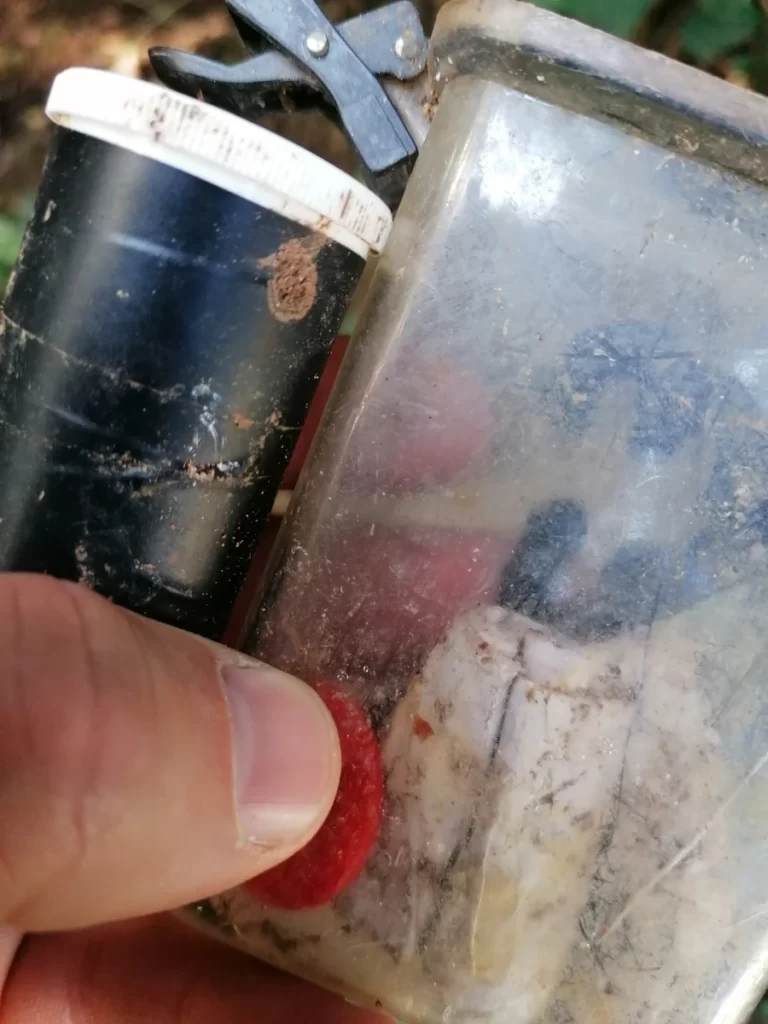 A couple of small Geocaches.
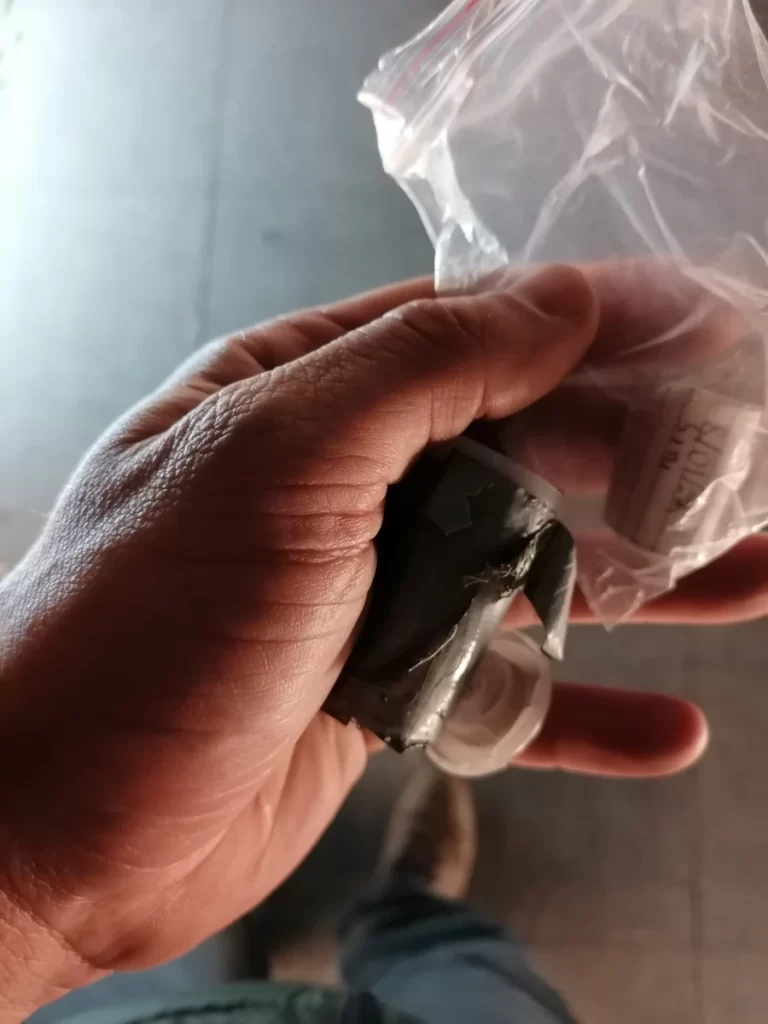 A magnetic film canister with a log in a plastic bag.
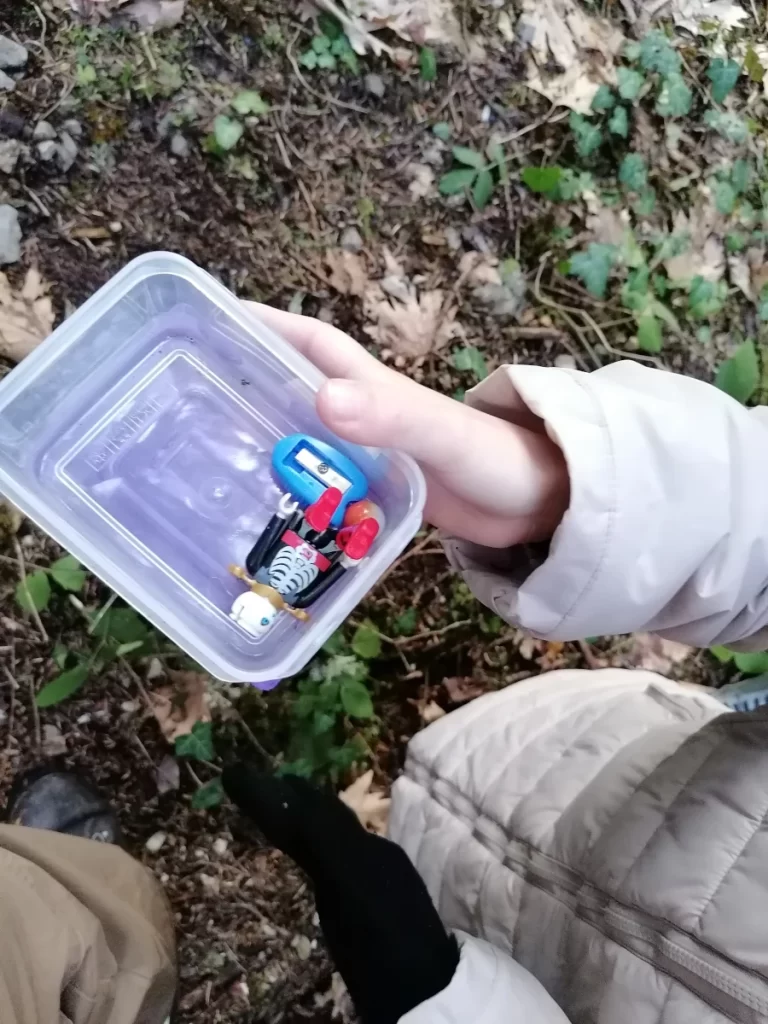 Some tradeables inside a small Geocache.
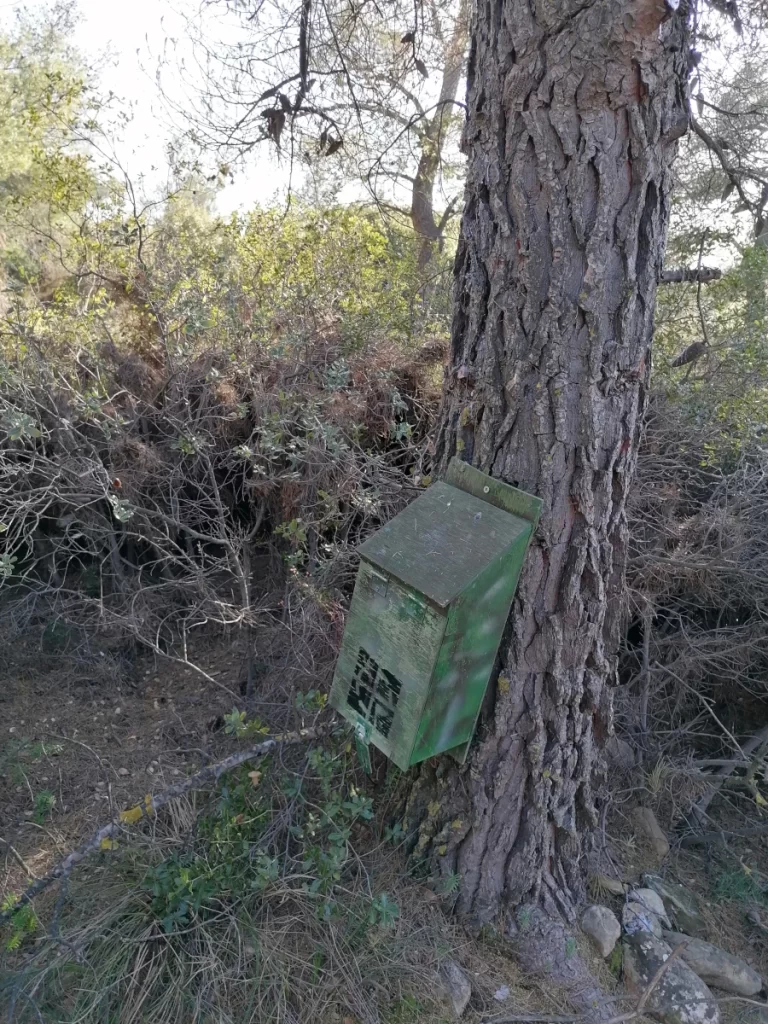 An example of a large Geocache.
 – on the map. Usually there are more than enough nearby. All other icons are premium features, which you could enable later, or right away if you’d like.